Talk To Anthony - Call (951) 202-2303

The Financial Sinker: Why a "Bargain" Home Can Be a Terrible Financial Investment
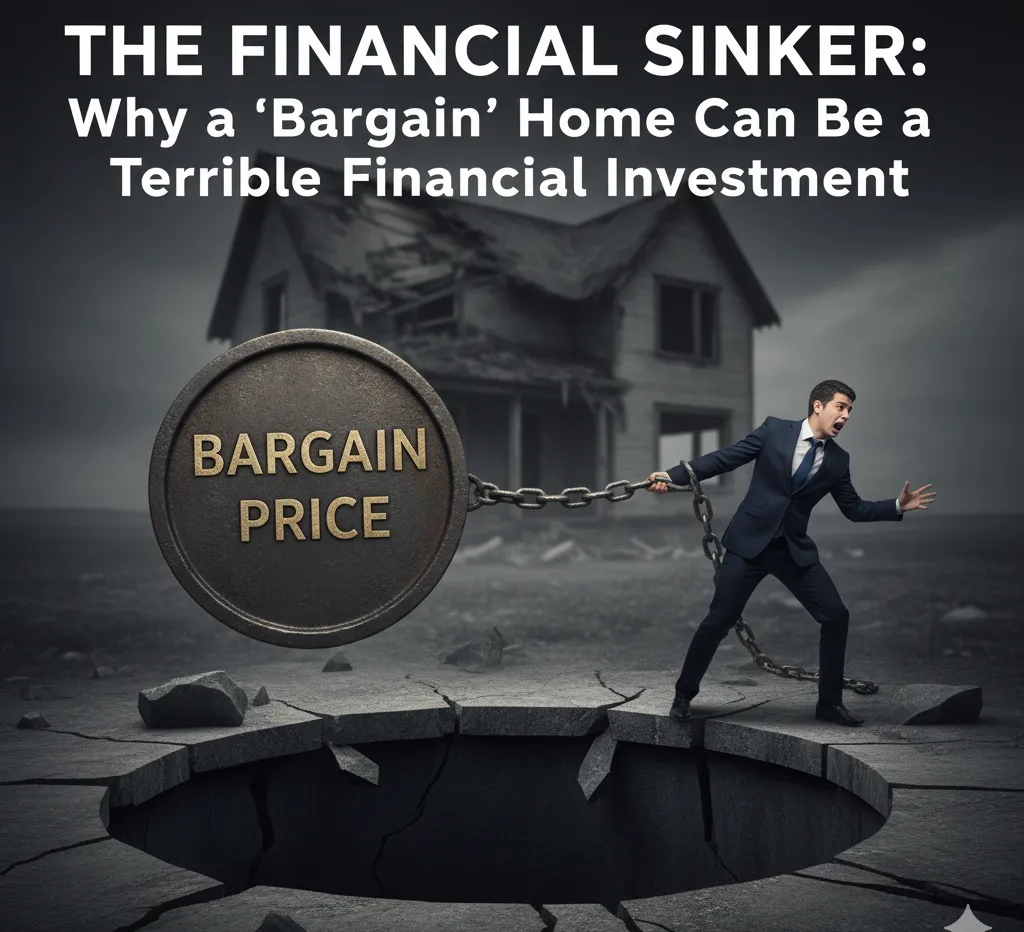
When you think of a good financial investment, you often look for a low entry price. But when it comes to real estate, the cheapest home on the market can often be a financial trap, not a smart investment. A surprisingly low price is often a sign of unseen liabilities that can quickly erode your capital and turn a "bargain" into a financial sinkhole.
The Financial Fallout of Hidden Issues
A low price tag can be a powerful illusion, but the true cost of a property is its purchase price plus the cost of all necessary repairs.
• The High Cost of Structural Repair: Foundation issues are one of the most expensive problems a homeowner can face, with costs ranging from thousands to tens of thousands of dollars. This is a massive, unexpected capital outlay that will sink your ROI.
• The Mold Tax: Mold remediation is not cheap. The cost of hiring professionals to remove mold and repair the underlying water damage can be a major financial hit.
• Financing and Insurance Penalties: A cheap, poorly-maintained home may not qualify for traditional financing, forcing you into a higher-interest loan that eats into your monthly cash flow. Additionally, if the home is in a high-risk area, insurance premiums can be exorbitant, or the property might not be insurable at all, putting your investment at risk.
• Lack of Appreciation: A core tenet of real estate investment is appreciation. A cheap home in a declining neighborhood may never increase in value, meaning you will never get a return on your investment and could even lose money when you sell.
The True ROI: Price vs. Value
A smart investor looks at a property's potential for appreciation and its long-term financial viability. A low price is just one variable.
• Location as a Key Asset: Location is a financial asset. A home in a growing neighborhood with good schools and amenities will appreciate, regardless of its initial condition. A home in a stagnant area will not.
• The Cost of Inefficiency: An old HVAC system and poor insulation are not just inconvenient; they are a long-term financial drain through high utility bills.
• Resale Risk: The cheapest home on the block is often the hardest to sell. Will you be able to find a buyer who is willing to take on the same risks you did?
Investment Due Diligence
• Don't Skimp on the Inspection: View the home inspection as a critical part of your financial due diligence. It can reveal liabilities that could cost you tens of thousands of dollars.
• Calculate the All-In Cost: Don't just look at the asking price. Get quotes for major repairs and add them to the purchase price.
• Consult an Expert: Work with a real estate agent who understands the financial dynamics of the local market and can help you identify a property that is a true asset, not a financial liability.
By looking beyond the price tag and focusing on the true value and long-term financial health of a property, you can ensure that your next real estate purchase is a smart investment, not a money pit.
Get In Touch
(951) 202-2303
2514 S. Hacienda Blvd. Ste. A
Hacienda Heights, Ca 91745
Meet Your Agent

Anthony Solomon