Talk To Anthony - Call (951) 202-2303

Renting vs. Buying: The Pros and Cons
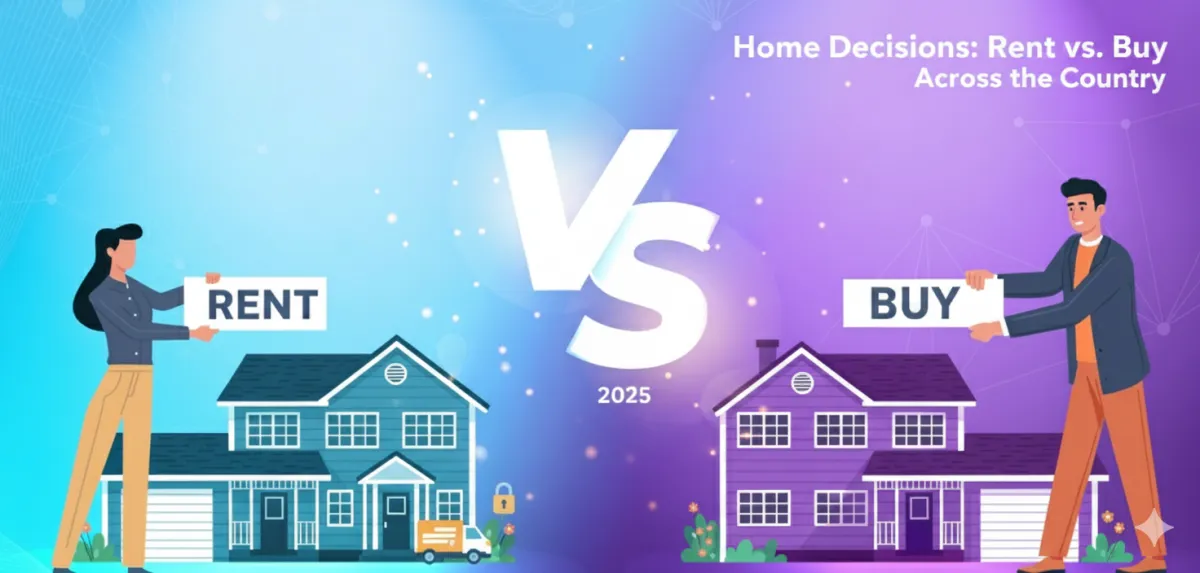
Deciding whether to rent or buy a home is a major financial decision that can have a significant impact on your short- and long-term goals. While a few decades ago, homeownership was often the default path, today's market conditions—including high home prices, rising interest rates, and economic uncertainty—make it a more complex choice.
So, how do you decide what's right for you? Let's break down the key factors to consider.
Renting vs. Buying: The Pros and Cons
Both renting and buying come with distinct advantages and disadvantages.
The Case for Renting
Renting offers flexibility and lower upfront costs. You aren't tied to a specific location and can easily move if your job or lifestyle changes. This also means fewer responsibilities, as your landlord typically handles maintenance and major repairs. However, you aren't building equity, and you have limited control over your living space and potential rent increases.
The Case for Buying
Buying a home is a long-term investment that allows you to build equity with every mortgage payment. Historically, real estate has proven to be a solid investment, and a fixed-rate mortgage can provide predictable monthly payments. Homeownership also gives you complete control over your property, allowing you to make upgrades, renovations, or even rent out a portion of the space.
The 5% Rule: A Simple Financial Yardstick
A quick way to compare the costs of renting and buying is to use the 5% rule. This rule estimates that the annual unrecoverable costs of homeownership (like property taxes, maintenance, and the opportunity cost of your down payment) amount to roughly 5% of the home's value.
Here's how it works:
• Calculate 5% of the home's value.
• Divide that number by 12 to get a monthly cost.
• Compare this monthly cost to the rent for a similar property in the same area.
For example, if a home is valued at $400,000, 5% of its value is $20,000 per year, or about $1,667 per month. If you can rent a comparable home for less than this amount, renting might be the better financial choice in the short term. This rule is a simple guide, not a definitive answer, so it's essential to consider all factors.
Location, Location, Location
The rent-or-buy decision is heavily influenced by your location. In some cities, buying may be more feasible, while in others, renting is often the more practical option.
• In a city like Chicago, buying can be more affordable compared to coastal cities. Property values are relatively stable, but high property taxes are a notable factor. Renting in Chicago offers the flexibility to explore its diverse neighborhoods without the long-term commitment of ownership.
• In Seattle, home prices have seen steep appreciation. While buying can be a great investment in a high-growth market, the cost of entry can be a significant barrier. Renting, though also pricey, offers flexibility for those who aren't ready to settle down.
• In New York City and Los Angeles, high housing prices often make renting the most practical choice. However, in both cities, the choice between renting and buying often comes down to your personal financial situation and whether you want to establish long-term roots.
Beyond Single-Family Homes: Condos vs. Apartments
The choice isn't always between a single-family house and a rental. You might also be weighing the pros and cons of buying a condo versus renting an apartment.
• Buying a condo allows you to build equity while enjoying an urban lifestyle and on-site amenities. Your housing costs are fixed with a stable interest rate, and you can benefit from tax advantages of homeownership. However, you'll need to account for Homeowners Association (HOA) fees, which can increase over time.
• Renting an apartment means fewer upfront costs and greater flexibility. You don't have to worry about HOA fees or the complex politics of a homeowners' association.
Making the Right Decision for You
Ultimately, the choice between renting and buying is deeply personal. To make the most informed decision, you should:
• Run the numbers: Use a comprehensive rent vs. buy calculator to compare costs. Be realistic with your estimates for mortgage payments, property taxes, insurance, and maintenance.
• Assess your priorities: Do you value financial investment and stability, or flexibility and freedom? Are you willing to take on the responsibilities of home maintenance? Your personal goals and lifestyle should guide your decision.
• Consider market conditions: Look at local market trends, including interest rates and whether it's currently a buyer's or seller's market.
Don't fall for the myth that "renting is throwing money away." Both options have their place. By carefully considering all the financial and personal factors, you can choose the path that aligns best with your life and long-term goals.
Get In Touch
(951) 202-2303
2514 S. Hacienda Blvd. Ste. A
Hacienda Heights, Ca 91745
Meet Your Agent

Anthony Solomon